A Brief History of the VU Meter
The VU meter was born in 1939, the result of a collaboration between Bell Laboratories, CBS and NBC. American broadcasters needed a standard way to measure audio levels across their networks so that programmes transmitted from different studios at different times maintained consistent volume. The result was the Volume Unit meter, a device with a specific ballistic response time, a standardised scale and a needle that moved in a way that correlated with how loud the human ear actually perceives sound.
It was, from the start, as much a human interface as a technical instrument. The 300-millisecond rise time built into the standard was deliberate. Engineers did not want a meter that responded to every tiny transient in the signal. They wanted one that reflected average loudness, something an operator could watch and act on in real time without their eyes and hands being overwhelmed by a needle jumping all over the place.
The design spread fast. By the 1950s VU meters were standard equipment in broadcast facilities across the world. By the 1960s they had migrated into recording studios, tape machines, mixing desks and, inevitably, consumer hi-fi equipment.
The Golden Age of the Hi-Fi Stack
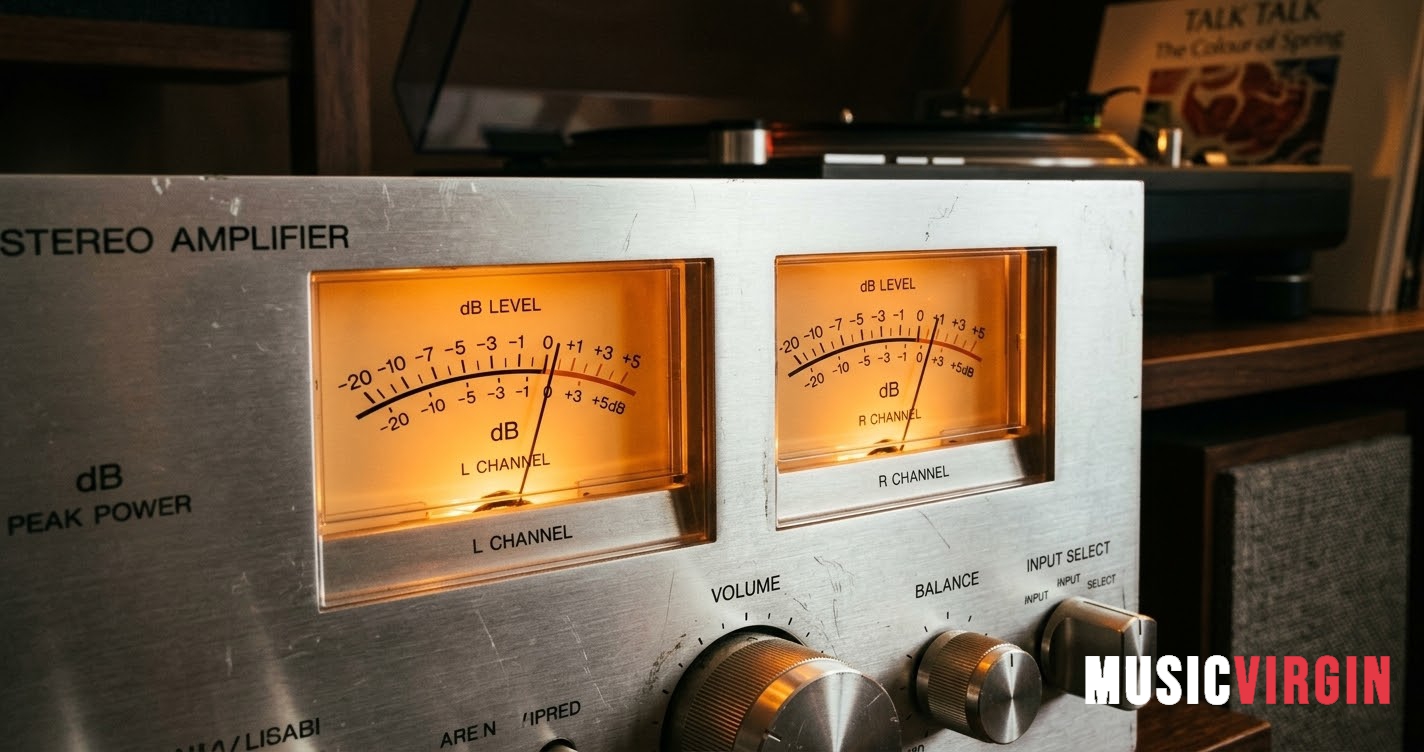
If you grew up in the 1970s or 1980s there is a good chance you had one in your living room without ever knowing its technical name. The large rack-mounted amplifiers and receivers of that era from brands like Pioneer, Marantz, Sansui, Technics and Sony, built VU meters into their front panels as a matter of course. Twin needles, backlit in amber or green, swinging in near-unison as a record played. It was a look that defined an era of home audio.
For the manufacturers, the meters served a practical purpose: they let the listener see that the amplifier was working, that the signal was healthy and that nothing was being pushed into distortion. For the listener, they became something more. Watching a pair of VU meters dance to music is an oddly compelling experience. The needles have a physical weight to them, a momentum and decay that feels alive in a way a row of LEDs does not quite replicate.
The same instruments appeared in the recording studio on a grander scale. Large format consoles like the SSL 4000, the Neve 8078 and the API 2488 used VU meters on their master bus outputs and on individual channels. Tape machines, the Studer A80, the Ampex MM1200 had them mounted in pairs, one per track or one per stereo bus. In an era of analogue tape, reading a VU meter accurately was a core professional skill. Push the level too low and you buried the signal in tape noise. Push it too high and you got distortion. Hit the sweet spot and the tape breathed and saturated in the way that still makes analogue recordings sound the way they do.
What the Needle Actually Told You
The VU meter is not a precise instrument in the way a modern digital level meter is. That was always part of the point. Its 300-millisecond averaging window means it does not catch fast transients, a snare crack or a plucked string can hit several decibels higher than the VU reading shows. Engineers knew this and worked with it. Keeping the needle hovering around 0 VU on programme material while leaving headroom for those unseen peaks was a skill developed through practice and experience.
The red zone on a VU scale typically begins at 0 VU or just above. On analogue equipment this was a caution rather than a crisis. Valve amplifiers and tape machines tolerate a degree of level beyond 0 VU with a graceful warmth, a gentle saturation that many engineers found musically useful and that remains a primary reason people still record to analogue tape today. The meter told you where you were, but analogue gear gave you room to breathe.
The Shift to LEDs and Digital Meters
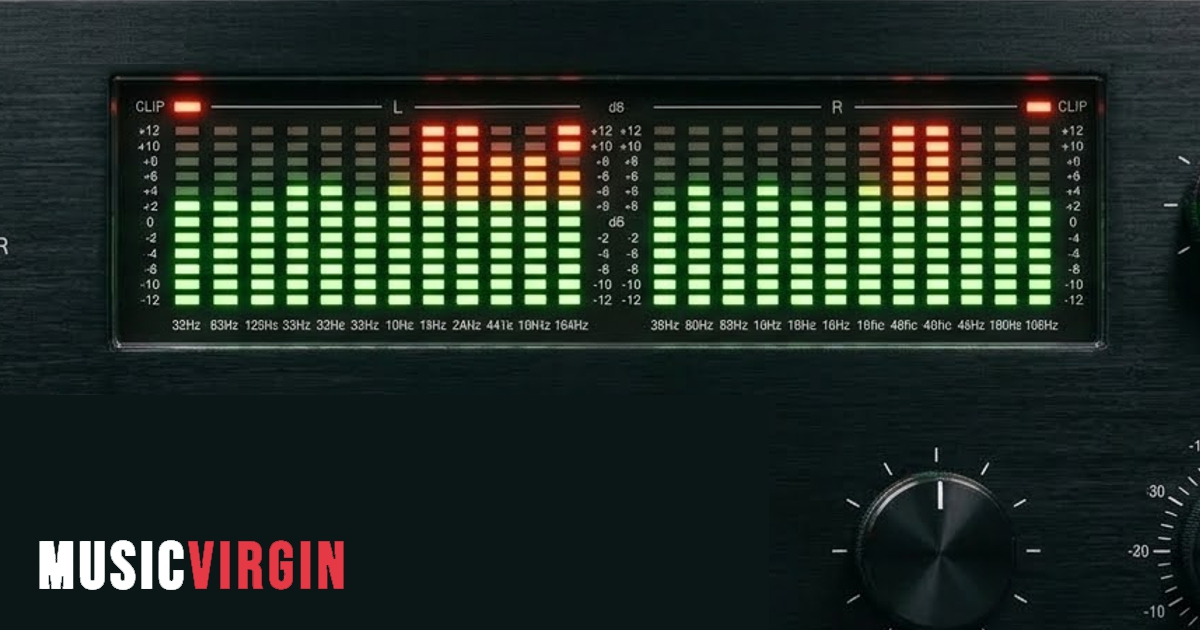
Through the 1980s and into the 1990s, LED bar graph meters began replacing needle-based VU meters in professional and consumer equipment. The advantages were straightforward: LEDs are cheaper to manufacture, more reliable mechanically, easier to read in different lighting conditions and critically, fast enough to show peak levels that a VU needle would miss entirely.
Digital audio made peak metering essential. Unlike analogue, where exceeding 0 VU caused gentle saturation, exceeding 0 dBFS in a digital system causes hard clipping an abrupt, harsh distortion with no headroom or forgiveness at all. A meter that averaged signal levels was no longer sufficient as the primary reference. You needed to see every peak, instantly.
Consumer hi-fi followed the same trajectory. By the mid-1990s the backlit analogue meters on amplifier front panels had largely given way to LED ladders or, in many cases, nothing at all. The minimalist design direction that took hold across consumer electronics had little room for the visual generosity of a pair of swinging needles.
Why They Still Resonate
The VU meter never disappeared entirely. Boutique analogue hardware manufacturers still build them into compressors, preamps and summing mixers. Plugin developers recreate their ballistic response in software because engineers find them easier to read on programme material than a fast digital scale. Vintage amplifier restorers treat working meters as a significant part of a unit's value.