AI Music: The Moment Everything Got Complicated
In April 2023 a track called Heart on My Sleeve appeared on streaming platforms. It featured convincing vocal performances in the style of Drake and The Weeknd, a professional-quality production and lyrics that sounded entirely plausible for both artists. It had been generated entirely using AI voice cloning tools and was uploaded by an anonymous creator under the name Ghostwriter977. Universal Music had it removed within days. It had already accumulated hundreds of thousands of streams.
That moment made something concrete that had been theoretical for years. AI was no longer a curiosity producing odd, glitchy audio that nobody would mistake for real music. It was producing convincing, emotionally coherent recordings that could travel through the music industry's distribution infrastructure undetected, reach real audiences and generate real engagement. The question of what to do about that is one the industry is still working through.
What AI Music Tools Can Do Right Now
The current generation of AI music platforms divides roughly into two categories. Text-to-music tools such as Suno, Udio and Google's MusicFX generate complete tracks from a written description. Type in "melancholic piano ballad in the style of late 1970s singer-songwriter" and within seconds you have something that resembles exactly that. The results are not always consistent and the best outputs require some iteration, but the gap between AI output and human production has closed to a degree that would have seemed implausible five years ago.
The second category covers AI-assisted tools that sit inside existing production workflows. Stem separation, automatic mastering, melody generation from a chord progression, lyric suggestion, vocal tuning and even mixing assistance are all available now inside mainstream Digital Audio Workstations (DAWs) and standalone applications. These tools do not replace the producer but they accelerate and augment what a single person can achieve alone.
Both categories are developing fast. The models that exist today will look primitive against what is available in two or three years.
What This Means for Artists
The concern for working musicians is not abstract. Sync licensing, the licensing of music for use in film, television, advertising and games, has historically been a reliable revenue stream for independent artists. AI is already displacing a portion of that market. Production companies that previously licensed library music from human composers can now generate functional background music from a prompt in seconds at a fraction of the cost.
Session musicians face a related pressure. AI voice and instrument models trained on existing recordings can replicate specific playing styles, tones and performance characteristics with increasing accuracy. The ethical and legal questions around this are significant. The practical impact on session work is already being felt.
At the same time, artists who understand these tools are finding genuinely new creative possibilities. AI can suggest chord progressions outside a songwriter's habitual patterns, generate rough vocal ideas to react against or produce textural sounds that would take hours to design manually. Used as a collaborator rather than a replacement, AI expands what is possible for a single creative working without a large team or budget.
Can You Actually Detect AI Music?
This is where it gets technically interesting. Human music production leaves traces. The micro-timing variations in a live performance, the way a room affects the frequency response of a recorded instrument, the noise floor characteristics of analogue hardware, the breath and physical limits of a human singer: all of these create patterns in audio that differ statistically from what AI models generate.
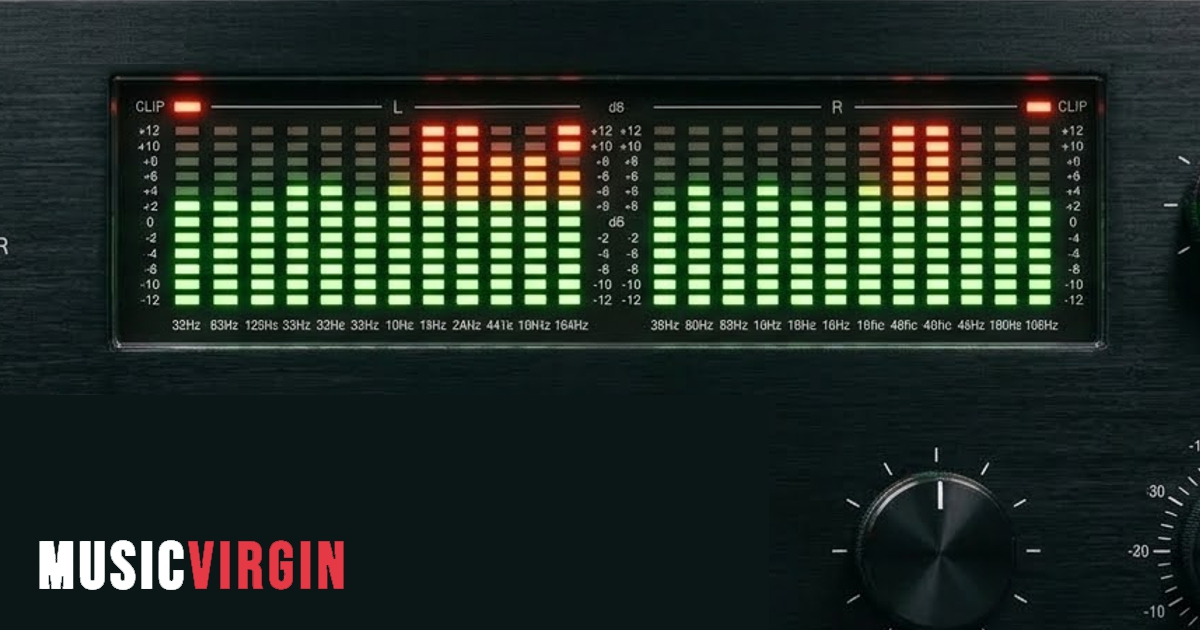
AI audio has its own patterns. Spectral analysis often reveals unusual consistency in areas of the frequency spectrum where real instruments would show natural variation. The stereo field in AI-generated music sometimes lacks the physical depth of a real recorded space. Transients can behave in ways that do not match the physics of how acoustic instruments actually produce sound. Vocal formants generated by AI voice models show statistical regularities that differ from natural human speech and singing.
None of these indicators is conclusive on its own. A well-produced AI track may exhibit few of them. A lo-fi recording made by a human may exhibit several. This is why detection tools return probability scores and breakdowns rather than binary verdicts.
Music Virgin's free AI music detector analyses uploaded audio and returns a breakdown of the characteristics it finds, with an overall indication of how likely the track is to contain AI-generated elements. It is a tool for curiosity, research and awareness rather than a courtroom instrument. Importantly, nothing you upload is stored or retained. The analysis runs in your session and your audio stays entirely private.
Where This Goes From Here
The honest answer is that nobody knows with confidence. The technology is moving faster than regulation, faster than industry agreements and faster than the legal frameworks designed to protect creative work. What seems clear is that the artists, producers and industry professionals who engage with these tools and understand what they can and cannot do will be better placed than those who ignore them entirely.
The music that matters most to people will always have a human origin story behind it. Emotion, experience, struggle and identity are the things that give recorded music its weight. AI can approximate the surface of those things with increasing skill. Whether it can produce the real thing, and whether listeners will eventually stop caring either way, are the two questions that make this the most interesting and unsettling moment in music's history since the invention of the recording itself.